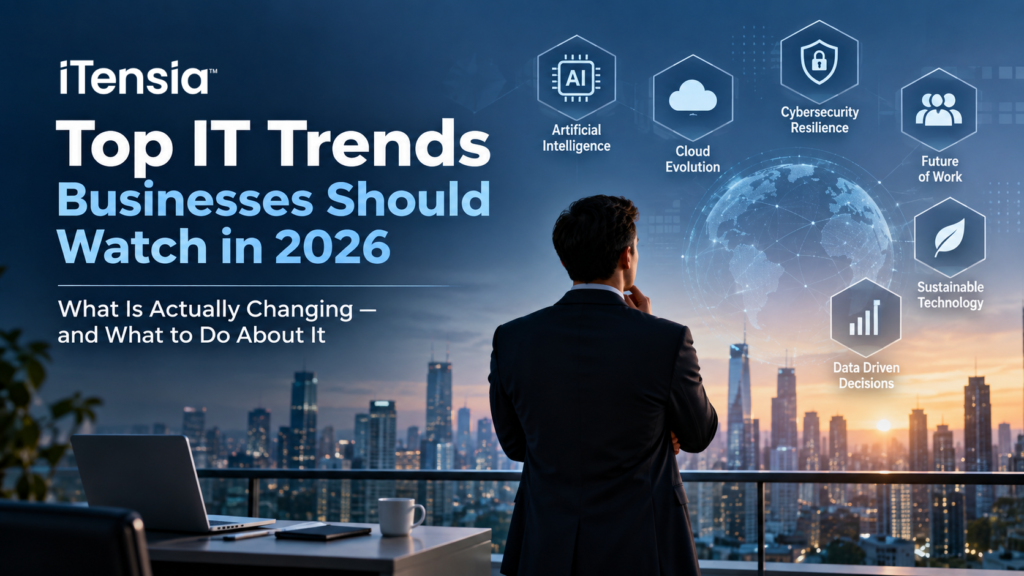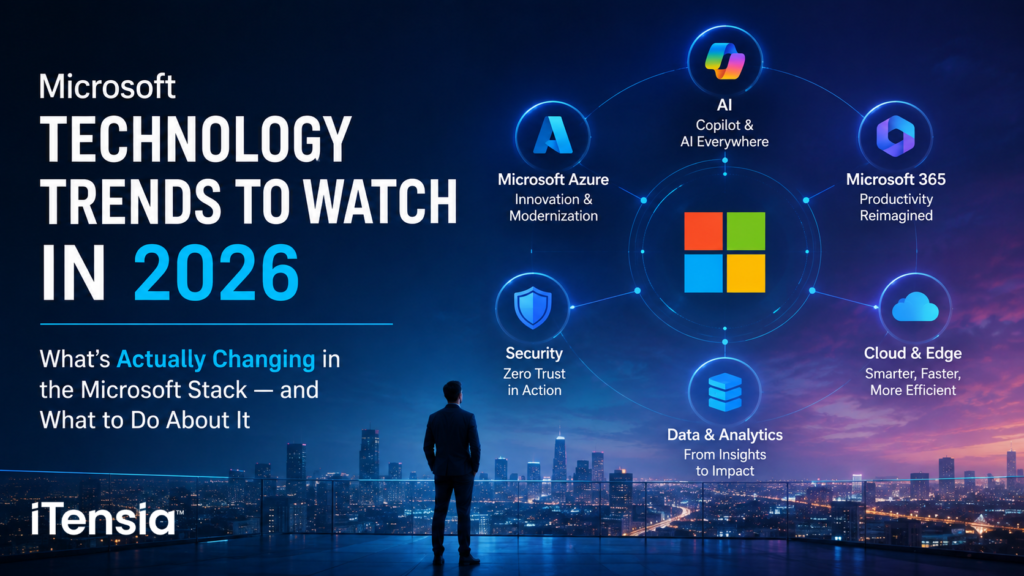
The boardroom conversation around enterprise IT has shifted. It is no longer about chasing the next shiny platform or replacing legacy systems for the sake of it. Chief information officers at the world’s largest companies are asking sharper questions. Will this investment hold up under audit? Can our teams actually use it on Monday morning? Does it talk to the systems we already depend on? And when something goes wrong at 3 a.m., who picks up the phone?
These are the practical questions that separate genuine modernisation from expensive theatre. They are also the reason Fortune 500 leaders have built long-term partnerships with iTensia. Enterprise transformation is not a slide deck. It is a sustained effort to make complex systems calmer, safer and more useful to the people who run a business every day.
The Real Problem with Most IT Modernisation Programmes
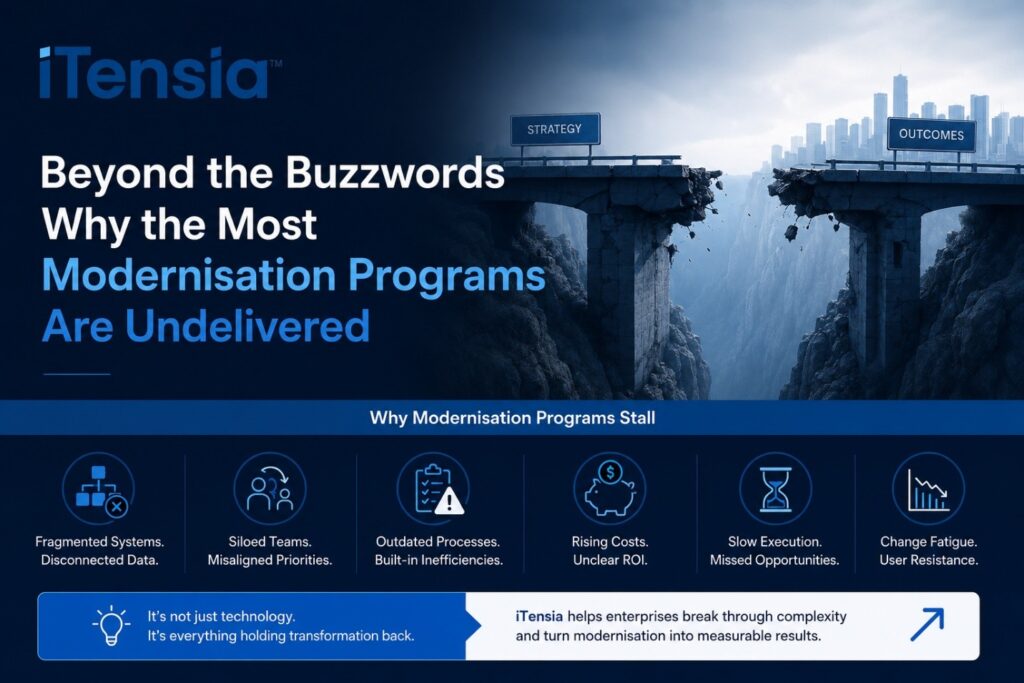
Enterprise digital transformation requires far more than new software.
Walk into any large enterprise and you will find the same story repeated across departments. There is the ERP rollout that stretched four years and still has not delivered the promised reporting layer. There is the cloud migration that moved workloads but doubled the monthly bill. There is the analytics platform that nobody outside the data team knows how to query. The technology is real. The outcomes are not.
Part of the problem is fashion. Vendors push the language of the moment, whether that is digital transformation, AI-first operations or zero-trust everything. Enterprises buy the language, then discover the underlying work has not been done. Integration was an afterthought. Security was bolted on at the end. Change management was a one-hour webinar. The result is a stack that looks modern on paper and behaves exactly like the old one in practice.
iTensia approaches the work differently. The first conversation is rarely about products. It is about the business itself: where the friction sits, which processes consume disproportionate effort, where compliance risk is climbing and which decisions are being made without good data. Only after that picture is clear does the conversation turn to architecture, platforms and timelines. This sequencing matters more than any specific technology choice.
Security That Is Built In, Not Sprinkled On
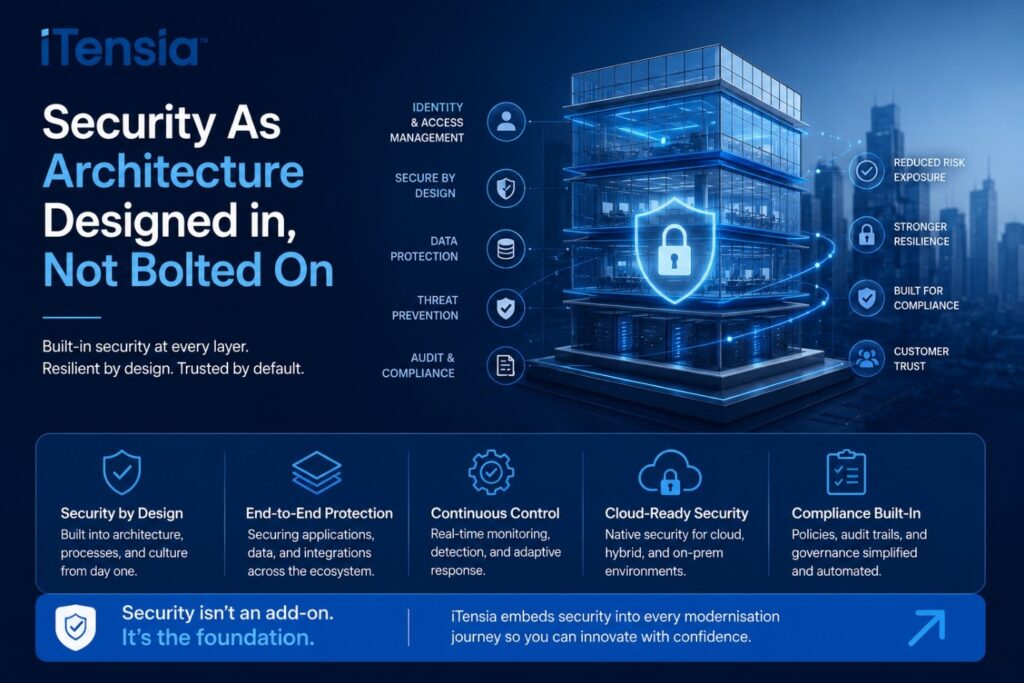
Security designed into the architecture, not bolted on afterwards.
For a Fortune 500 enterprise, a security incident is never just a security incident. It becomes a regulatory event, a board-level discussion, a stock-price movement and, in some industries, a public hearing. The cost of getting security wrong is now measured in years of reputational repair, not just incident response hours.
iTensia treats security as architecture, not a feature. Identity, access control, encryption, network segmentation and audit logging are designed into the foundation of any modernisation programme rather than added once the system is live. Every integration is reviewed for least-privilege access. Every data flow is mapped for residency and compliance with the regulations that matter to the customer, whether that is GDPR, HIPAA, SOC 2, PCI DSS or industry-specific frameworks.
This matters for two reasons. First, it dramatically reduces the surface area available to attackers. Second, it makes audit cycles less painful. When a regulator or an internal compliance team asks how a particular data element is protected, the answer exists in the architecture documentation rather than in a stressed engineer’s memory.
Scale Without Surprises
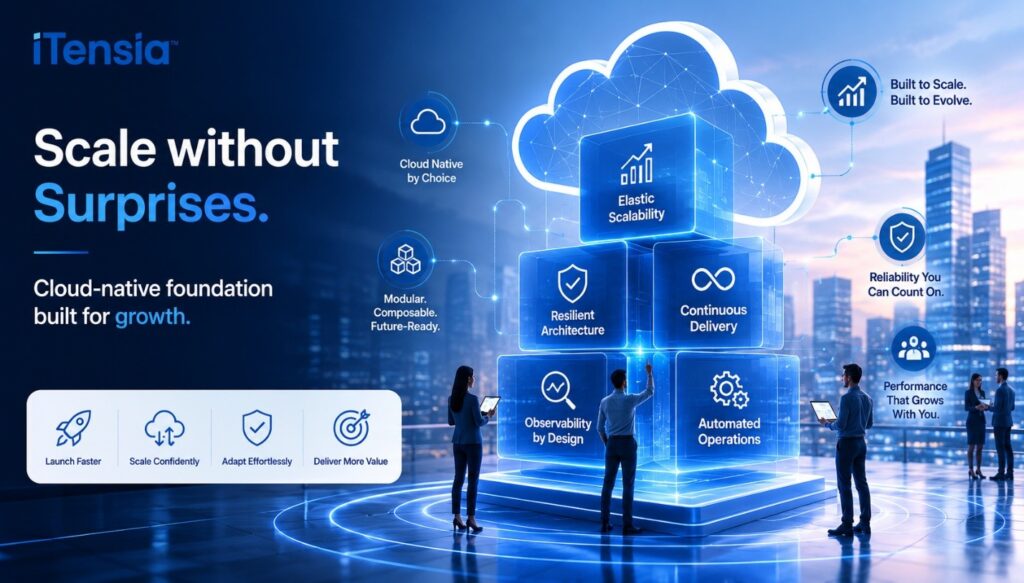
Cloud-native architecture built to absorb growth without compromise.
Scalability is one of the most overused words in enterprise sales. In practice, it means something very specific. Can the system absorb a tenfold increase in transaction volume during a peak event without falling over or quietly corrupting data? Can it support a new business unit acquired next quarter without a six-month integration project? Can it expand into a new geography without rewriting half the stack?
iTensia builds for these moments rather than just the steady state. Cloud-native foundations, containerised workloads, event-driven integration patterns and well-designed API layers give enterprises room to grow without renegotiating their architecture every two years. Just as importantly, observability is treated as a first-class concern. When traffic spikes or a downstream service slows down, engineering teams see the problem in real time rather than learning about it from frustrated customers.
The same discipline applies to cost. A scalable system that triples in price every time usage doubles is not actually scalable in any business sense. iTensia engineers actively design for cost efficiency, using techniques such as workload-aware autoscaling, reserved capacity planning and continuous rightsizing so that growth and spend remain in a sensible relationship.
Working with What Already Exists
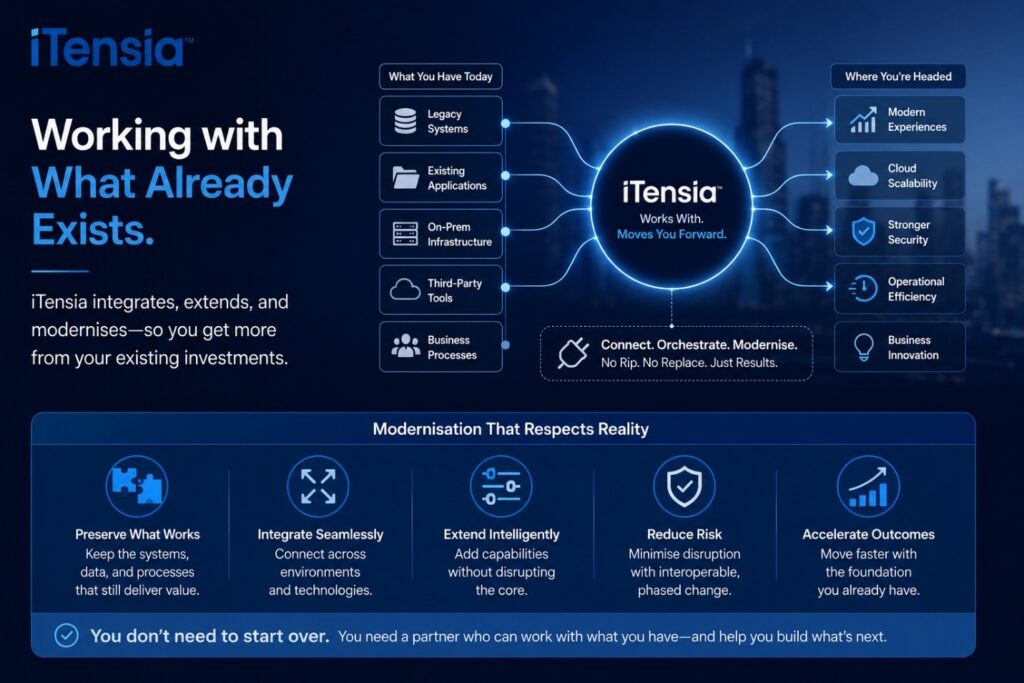
Bridging legacy systems with modern platforms through carefully designed APIs.
One of the quiet truths of enterprise IT is that the systems you wish you had are usually less important than the systems you already run. Mainframes, twenty-year-old ERP installations, custom-built order management platforms and dozens of departmental tools form the operational backbone of most large organisations. Ignoring them is not an option. Ripping them out is rarely affordable and almost never wise.
iTensia specialises in modernisation that respects this reality. Rather than treating legacy systems as obstacles to be removed, the approach is to wrap, integrate and gradually displace them on a schedule the business can absorb. API gateways expose legacy functionality to new applications. Event streams synchronise data across old and new platforms. Strangler-pattern migrations allow critical workloads to move piece by piece, with rollback options at every stage. The business keeps running. The transformation keeps progressing. Nobody loses a quarter to a botched cutover.
Data That Drives Decisions, Not Dashboards Nobody Reads
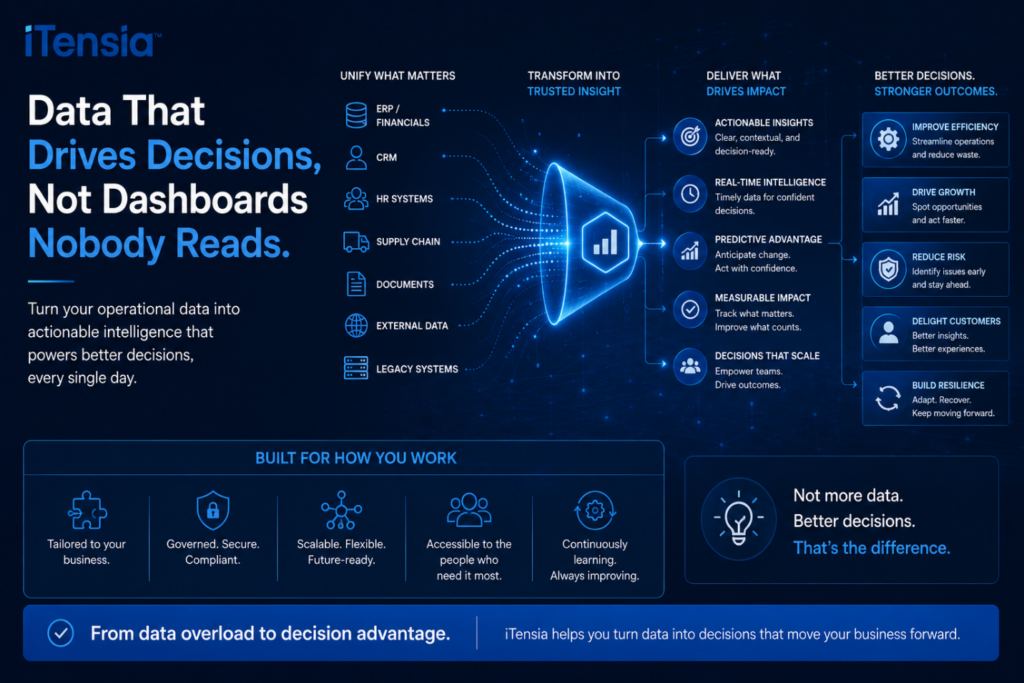
Analytics designed for adoption by operators, not just data teams.
Predictive analytics and AI have become the default selling points for any modernisation pitch, but the dirty secret of enterprise data programmes is that most of the effort still goes into plumbing. Pipelines break. Definitions disagree across departments. The marketing team’s view of a customer is not the finance team’s view, and neither matches the support team’s records.
iTensia begins data work where it actually starts: with governance, lineage and shared definitions. Once the foundation is trustworthy, the more advanced layers, including machine learning models, forecasting engines and recommendation systems, deliver results that operators actually believe and act upon. A demand forecast is only useful if the supply chain team trusts it enough to commit inventory against it. A churn prediction model is only useful if account managers change their behaviour in response. iTensia designs analytics for adoption, not just for accuracy on a test set.
A Partner Built for the Long Run
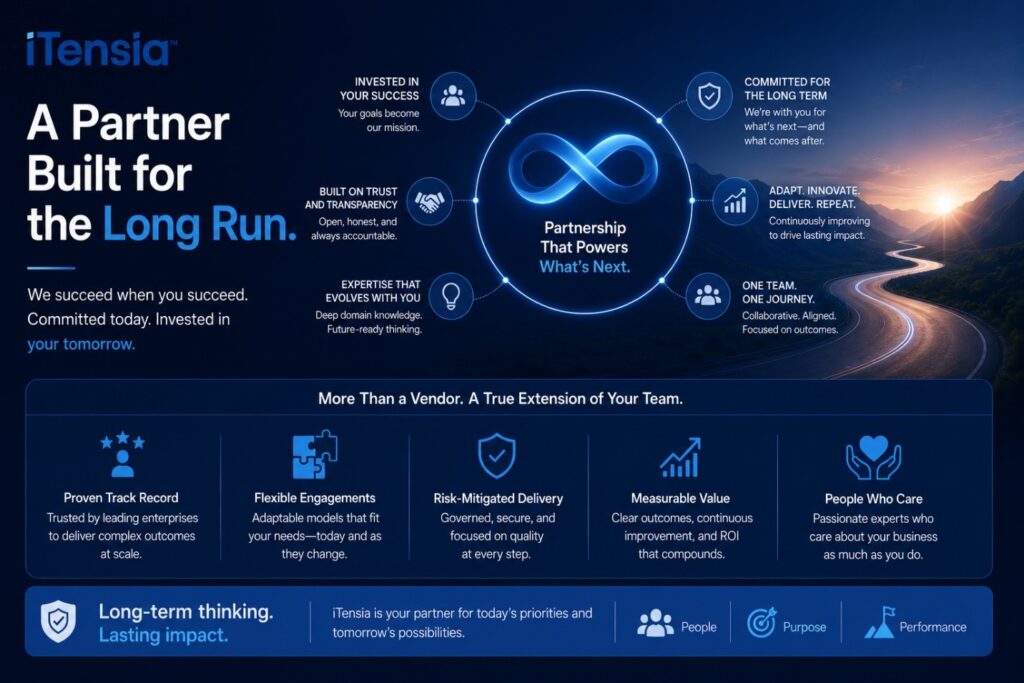
Long-term technology partnership that grows with the business.
Enterprise modernisation is not a project with a fixed end date. Business priorities shift, regulations evolve, new technologies appear and old ones reach end of life. The partners that genuinely add value are the ones who stay involved through these cycles, helping the customer make sensible decisions year after year rather than chasing the next big sale.
This long-term orientation shapes how iTensia engages with Fortune 500 clients. Engagements typically begin with a focused assessment, move into a defined transformation programme and then settle into a sustained partnership covering operations, optimisation and ongoing modernisation. Knowledge stays with the customer. Documentation is maintained, not abandoned. Engineering teams from both sides build genuine working relationships rather than transactional vendor exchanges.
What This Looks Like in Practice
For a global manufacturer, the work might mean consolidating dozens of regional ERP instances into a single cloud-based platform while keeping production lines running across four continents. For a financial services group, it might mean rebuilding a core risk engine on event-driven architecture to meet new reporting requirements without disrupting trading desks. For a healthcare network, it might mean unifying patient data across acquired hospitals while meeting strict privacy regulations in every jurisdiction. The technologies differ. The discipline behind the work does not.
In every case, the measure of success is the same. Operating costs come down. Time to launch new products or enter new markets shrinks. Security posture strengthens. Audit findings reduce. Employees spend less time fighting their tools and more time on work that matters. These are the outcomes that justify investment in modernisation, and they are the outcomes that keep Fortune 500 leaders coming back to iTensia.
Modernise with Confidence
Enterprise IT does not reward shortcuts. It rewards patience, rigour and partners who understand that technology is a means rather than an end. If your organisation is ready to modernise with confidence, with a partner that takes security, scale and real-world complexity seriously, iTensia is built for the work.
Ready to start the conversation?
Write to connect@itensia.com and let’s talk about what modernisation could look like for your enterprise.